2025 Tribal-State Government-to-Government Summit builds bridges

Annual summit provides opportunities to discuss solutions to critical issues facing Oregonians in rural communities
 

Salem, OR — Oct. 7-8, Governor Tina Kotek and First Lady Aimee Kotek Wilson attended the 2025 Tribal-State Government-to-Government Summit, co-hosted by the Coquille Indian Tribe at the Ko-Kwel Casino Resort in Coos Bay.

“This week, the nine sovereign Tribal nations of Oregon and state agency leaders came together to demonstrate that meaningful government-to-government relations require honest dialogue, mutual respect, and concrete action,” Governor Kotek said. “While others are busy building walls, we gathered to build bridges and grow our relationships.”

The annual summit brings together the Governor, Tribal government and senior staff from the nine federally recognized sovereign Tribes in Oregon, and Oregon state officials to address critical shared issues through government-to-government communication, coordination, collaboration, and consultation. The summit represents Oregon’s ongoing commitment to recognizing that Tribal governments represent the oldest sovereigns in Oregon by thousands of years. Ongoing relationships with the Tribes bring invaluable expertise, knowledge, and resources to address shared challenges and promote prosperity for all Oregonians.

“It was an honor to host Governor Kotek, Oregon’s nine federally recognized Tribal leaders and state agency directors here at our Ko-Kwel Casino Resort – Coos Bay. It was an incredible opportunity to bring attention to the needs of our Tribes, the communities we live in, and our entire state,” said Coquille Indian Tribe Chairman Brenda Meade.

“Through this Summit, we hope to have found new ways to strengthen our government-to-government relations while creating new opportunities for some much-needed fine-tuning in our communication and partnerships. And we were happy that, while there were serious topics to be tackled, in our Potlatch tradition we celebrated together, enjoying the beauty of our Coquille homelands.”

The summit featured keynote addresses from Coquille Indian Tribe Chairman Meade and Governor Kotek, bill signing ceremonies for tribal-related legislation, and a historic Sovereign Leaders’ Assembly where each Tribal Head of Government presented priorities directly to the Governor as equal partners.

Programming included cultural demonstrations at the Coquille Community Plank House, an inter-tribal celebration with traditional games and music, and an innovative neuroscience-informed workshop on strengthening government relationships. Pre-summit and post-summit cluster meetings addressed health and human services, economic development, natural and cultural resources, and public safety priorities, ensuring sustained collaboration between the federally recognized sovereign Tribal nations of Oregon and the State of Oregon.

For photos from the annual Summit, click here.

For a streaming of the Summit, click here.

Note to Editors: ​Oregon has been a national leader in tribal-state relations for nearly five decades. In 1975, the State of Oregon recognized the need for permanent dialogue with tribal governments and created the Legislative Commission on Indian Services (LCIS), an advisory body of 13 tribal leaders and legislators that serves as an ongoing forum for tribal-state issues.
 
Building on this foundation and Executive Order 96-30, Oregon became the first state in the nation to pass comprehensive tribal-state government-to-government relations law in 2001 with SB 770 (codified as ORS 182.162-.168). This groundbreaking legislation emphasizes the critical importance of establishing and maintaining ongoing communication between state agencies and Oregon’s nine federally recognized sovereign tribal nations to inform decision-makers and provide opportunities for collaboration on shared interests.
 
About the Coquille Indian Tribe: The Coquille Indian Tribe flourished in Oregon’s southwestern corner for thousands of years, cherishing the bountiful forests, rivers and beaches of a homeland encompassing over one million acres. In 1954, Congress declared the Coquille Tribe “terminated.” 35 years later the Tribe was formally restored to federal recognition in 1989. Today the Tribe numbers more than 1,200 members and it has regained more than 10,000 acres of ancestral homeland, proudly managing the bulk of it as sustainable forest. The Tribe provides education assistance, health care, elder services and (where needed) housing assistance to its people, while contributing substantially to the surrounding community’s economy. Its various enterprises employ approximately 1000 people, and its community fund is the region’s leading local source of charitable grants. For more about the Coquille Indian Tribe, visit coquilletribe.org.


###

Ko-Kwel Wellness Centers eye federal financial picture while providing essential healthcare

The Ko-Kwel Wellness Centers in Coos Bay and Eugene provide essential healthcare for Native and non-Native populations alike, often from rural areas. Now they’re bracing for service interruptions amid looming slashes to Medicaid, a crucial funding source that helps cover existing federal funding shortfalls.

Brenda Meade, Coquille Indian Tribe Chairwoman, said the clinic offers services that are vital for her people and the local communities.

“We as tribal nations are serving some of the most vulnerable populations in our nation. We’re doing very good work,” she said.  “We’re very efficient with our dollars, and we’re getting out to rural Oregon, where a lot of services are needed not just for Indian people, but community members.

The Ko-Kwel Wellness Centers serve as one-stop shops for community members to address multiple needs at once. Between the two centers, in Coos Bay and Eugene, there are laboratories, primary care physicians, pharmacies, dental services, mental health services, behavioral health services, community resources, an opioid treatment program and a rehabilitation and fitness center. 

Underscore Native News – August 27, 2025

KWC Eugene featured on Eugene Chamber of Commerce website

The Ko-Kwel Wellness Center in Eugene was recently featured in a series called “Queries and Quotes,” on the Eugene Chamber of Commerce website. 

Rooted in a legacy of service and tribal sovereignty, Ko-Kwel Wellness Center (part of the Coquille Indian Tribe) brings a culturally grounded, whole-person approach to health care in Eugene. From primary care to Oregon’s first tribally operated opioid treatment program, they’re building a healthier, more connected community, one partnership at a time. CEO Caryn Mickelson responded to the Chamber.

Open For Business Eugene – August, 2025

First Chinook fishery since 2021 proposed for Coquille River thanks to success of Coquille Tribe-ODFW partnership, volunteer efforts

NEWS RELEASE 

Oregon Fish and Wildlife 

Coquille Indian Tribe 


Contact 

Tim Novotny, Coquille Indian Tribe, (541) 751-7491, timnovotny@coquilletribe.org 

Michelle Dennehy, ODFW, (503) 931-2748, Michelle.N.Dennehy@odfw.oregon.gov 


Photo: Caption: ODFW Director Debbie Colbert (at podium) and Coquille Tribe Chairwoman Brenda Meade (to the right in black sweatshirt) on July 31, 2025 in Bandon, Ore. to announce a major step forward in their combined management effort on salmon recovery in the Coquille River. The first fall Chinook fishery since 2021 will be proposed for the Coquille River following the efforts of the Coquille Tribe, ODFW staff and STEP (Salmon Trout Enhancement Program) volunteers to improve the performance of the hatchery program. (photo credit: Coquille Tribe)


July 31, 2025 


BANDON, Ore.— Leadership of the Oregon Department of Fish and Wildlife and the Coquille Indian Tribe came together near the mouth of the Coquille River today to announce a major step forward in the combined management effort on salmon recovery.


ODFW is proposing to restart Chinook salmon fishing in the Coquille River this fall following the efforts of the Coquille Tribe, ODFW staff and extensive community volunteer work to improve the performance of the hatchery program. 


Under a Chinook proposal to be considered by the Oregon Fish and Wildlife Commission on Sept. 12 in Ontario and a wild coho proposal to be considered Aug. 15 in Salem, the following regulations would be in effect on the Coquille River this fall:

  • Open for salmon fishing Sept. 13-Oct. 15 from the Hwy 101 bridge upstream to the Hwy 42S Sturdivant Park Bridge near the town of Coquille  
  • Daily bag limit of two adult salmon (hatchery Chinook and wild coho only, but only one may be a wild coho) and a season limit of 3 wild coho


If approved, the season would mark the first fall Chinook opportunity on the Coquille River since 2021 and add to wild coho fishing opportunities that returned in 2024. Members of the public can comment on the proposals via the ODFW rulemaking page


Fall Chinook fisheries on the Coquille River have primarily been supported by abundant wild populations. But wild Chinook returns to the Coquille River fell dramatically in 2018 due to the illegal introduction and spread of smallmouth bass, a voracious predator of juvenile salmon. Warming river temperatures, low flows and poor ocean conditions also played a role. 


The long-running hatchery program, which relied heavily on wild broodstock, also experienced several setbacks. ODFW was unable to collect sufficient broodstock/eggs, so fewer smolts were released.  


ODFW and the Coquille Tribe signed a historic Memorandum of Agreement in June 2022 to collaborate, share resources and work as partners to enhance fish and wildlife

populations. They quickly leaned into their relationship and started working together more closely, alongside volunteers from local STEP (Salmon Trout Enhancement Program) groups. 


This broader effort increased brood collection efforts so more hatchery fish could be spawned and more smolts released. Improvements in design and operations at the Ferry Creek broodstock collection trap helped meet broodstock collection targets. A new smolt acclimation and adult collection site was also developed on the Tribe’s Lampa Creek property.   


The effort is just one of several actions ODFW, the Coquille Tribe, and volunteers are taking to restore fisheries in the Coquille River. Other efforts include: 

  • Habitat restoration and protection: Collaborative projects between the Tribe, ODFW, SWCD in Coos County and other partners using federal and other grant funds to improve fish passage and restore habitat. 
  • Electrofishing to remove smallmouth bass: Nearly 40,000 smallmouth bass have been removed from the Coquille River. 
  • Conservation hatchery program: An additional hatchery program to supplement the wild population is underway, rearing some fish at Elk River Hatchery and releasing them in the upper basin at a size and time when they are less vulnerable to smallmouth bass. 
  • Experimental hatchboxes: Unfed fry are being released from hatchboxes (aka streamside incubators) at several locations with genetic sampling of adult returns planned to help determine the experimental program’s effectiveness.  


During a press conference announcing the proposals today in Bandon, Ore., ODFW Director Debbie Colbert and Coquille Indian Tribe Chairwoman Brenda Meade expressed their commitment to continuing to work together to enhance salmon and steelhead populations and fishing opportunities. They say given the unique past, current, and anticipated future conditions of the Coquille system, a unified, holistic management approach is essential to achieve this mission. 


“Coquille people have a sacred duty to care for fish and wildlife that aligns with the mission of the ODFW well,” said Chair Brenda Meade.  “Our shared vision is that the Coquille and Coos systems will be widely recognized as a premier salmon and steelhead fishery and a cornerstone of the cultural, social and economic well-being of the region. We are calling this the “Hot Zone” – a Harvest Opportunity Zone. Our MOA and work we do under it is not only about government-to-government work and respect, but also about truly listening to this community and involving the community in our work as valued partners with knowledge, ideas, and contributions to give too.”


“We needed to act after the Coquille River reached a tipping point a few years ago with the drastic decline of wild Chinook from an average of about 10,000 returning adults to just 300 in 2019 due to low flows, warming river temperatures and invasive predators,” said ODFW Director Debbie Colbert. “The situation called for an all-out effort to pull Coquille River’s salmon and fishing opportunities back from the brink.” 


I’m thrilled we can celebrate this positive step in the right direction,” Colbert continued. “I hope the collective efforts of the Tribe, ODFW and volunteers bring more results for salmon in the future, including for wild runs which remain very low.” 


ODFW and the Tribe remain committed to management actions and projects that grow salmon and steelhead abundance and enhance harvest opportunities, with both natural and hatchery produced salmon playing an important role.  


Northwest Sportsman Magazine – July 31, 2025

KMTR-TV – July 31, 2025

KEZI.com – July 31, 2025

KPIC-TV – July 31, 2025

Jefferson Public Radio – July 31, 2025

Tribal Business News – August 2, 2025

OPB – August 2, 2025

MSN – August 2, 2025

Underscore Native News – August 8, 2025

The World Newspaper – August 9, 2025

Oregon Capital Chronicle – August 11, 2025


Coquille Resilience Management Plan

The Coquille Tribe worked with the Climate Resilience Task Force from 2023 to 2025 to establish the Coquille Resilience Management Plan. The Coquille Resilience Management Plan is a comprehensive strategy that ensures the Coquille people remain sovereign stewards of an ever-changing world. The completed plan was adopted by the Tribal Council in May of 2025.


Agreement signed with Oregon Department of Veterans’ Affairs to assist tribal veterans

The Oregon Department of Veterans’ Affairs signed a formal agreement with the Coquille Indian Tribe last week that will provide a framework for collaboration and increased resources dedicated to supporting the Tribe’s veterans in accessing their earned federal and state veterans’ benefits.

The Memorandum of Understanding was signed Tuesday, May 13, by ODVA Director Dr. Nakeia Council Daniels and Tribal Council Vice Chair Jen Procter Andrews, with Tribal government leaders and representatives, Tribal veterans and ODVA staff gathered to commemorate the historic partnership.

The formal signing was hosted on the Tribe’s sovereign land in North Bend in a ceremony that honored both the significance of the partnership and the traditions of the Coquille Indian Tribe.

The World Newspaper – May 29, 2025

KVAL-TV – May 29, 2025

Hoodline.com – May 29, 2025

Audacy.com – June 16, 2025

Coquille Tribe to rename casino after 30 years of success

Coos Bay, OR – The Coquille Tribe and the Coquille Economic Development Corporation are celebrating 30 years of casino operations along the shores of Coos Bay by renaming the Mill Casino Hotel & RV Park. The new name will be Ko-Kwel Casino Resort | Coos Bay.

The Mill Casino originally opened on May 19, 1995, transforming an old sawmill into the top tourist destination in Southern Oregon. Each year, approximately one million visitors come to Coos Bay to enjoy gaming, a variety of dining options, and numerous entertainment events.

“It was time for the Coquille Indian Tribe’s long-standing gaming and hospitality brand to clearly represent tribal ownership and the core values that define our leadership and service standards, to be proudly recognized as “Coquille,” states Margaret Simpson, CEO of the Coquille Economic Development Corporation, which manages the tribe’s gaming and hospitality operations with its diverse economic portfolio. “The tribe has faced significant challenges in its journey towards self-reliance over the past 35 years. As we expand our hospitality brand and outreach, we wanted to unify our projects under a single brand that honors our culture and recognizes the achievements of our tribal citizens.”

“The Ko-Kwel Casino Resort in Coos Bay will continue the legacy of the Mill as the economic engine for the region, allowing the tribe’s commitment to expanding our hospitality offerings throughout the Pacific Northwest,” explains Coquille Tribal Chair Brenda Meade. “Coquille has held deep historical significance in this region from time immemorial; it’s time we introduce that significance to the rest of the world through our branding.”

The new Ko-Kwel Casino Resort is undergoing a massive expansion project, including Oregon’s first tribally owned distillery, golf swing suites, enhanced dining options, and retail areas. “The new name, added amenities, and our renewed commitment to world-class hospitality are essential for our continued success in the competitive and ever-evolving destination travel market,” says Simpson. “Our team here is exceptional. Our new identity reflects years of hard work and dedication to this vision and will serve as a source of pride for all our team members for generations to come.”

KCBY-TV – May 19, 2025

Businesswire.com – May 19, 2025

KLCC.org – May 20, 2025

indiangaming.com – May 21, 2025

KOIN-TV – May 21, 2025

The Oregonian/OregonLive.com – May 23, 2025


Coquille Tribe opens new opioid treatment center in Eugene to fight Lane County overdoses

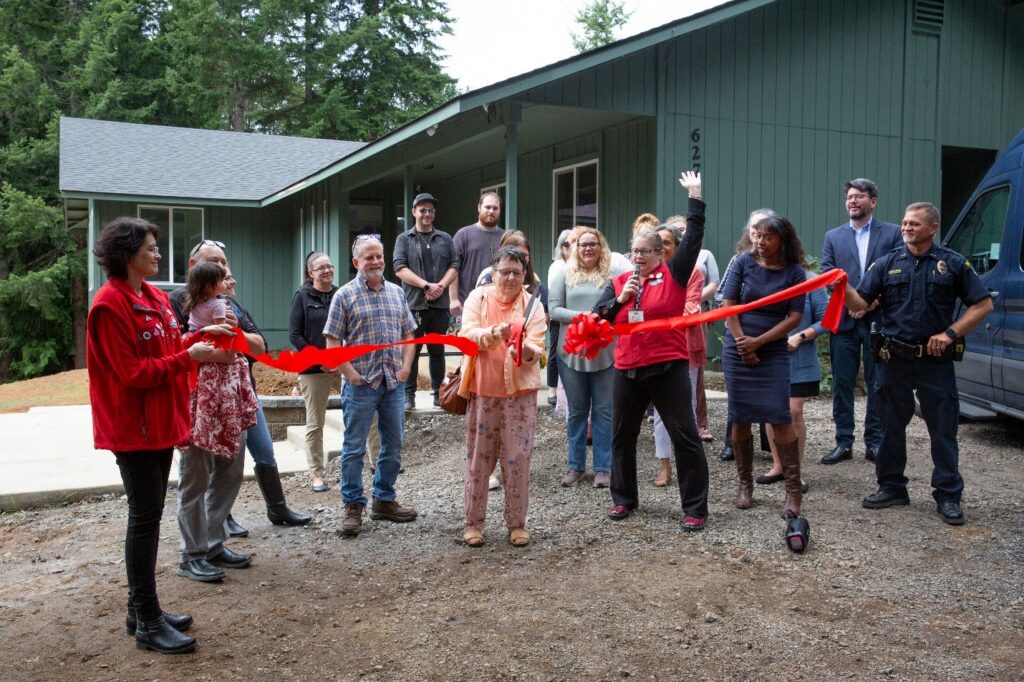
The Coquille Tribe held a ribbon cutting Friday for its brand-new opioid treatment center in Eugene, the Ko-kwel Wellness Center, which aims to combat overdoses in Lane County.

The clinic, along River Road, is not just open to tribal families and other indigenous people – it’s also accessible to the general public.

According to Oregon Health Authority, the death rate among Native Americans is more than double the state average.

KVAL-TV – May 9, 2025

REQUEST FOR PROPOSALS (RFP) 

SHISHDA HAWS CAFE 

KO-KWEL WELLNESS CENTER 

HEALTH AND WELLNESS DIVISION 

COQUILLE INDIAN TRIBE 

5-8-25 

Section I: Request for Proposals 

Purpose 

The Tribe invites qualified contractors to submit proposals based on the scope of work and conditions contained in this RFP. The purpose of this request for proposals (RFP) is to obtain a vendor to be licensed for operation of the the Ko-Kwel Wellness Center’s Shishda Haws Café. 

About 

The Coquille Indian Tribe is comprised of bands that historically spoke Athabaskan, Miluk, and later, Chinuk Wawa. Since time immemorial, they flourished among the forests, rivers, meadows, and beaches of a homeland encompassing well over 750,000 acres. In the mid 1850’s the United States negotiated treaties with the Coquille people. The U. S. Senate never ratified these treaties. The Coquille tribal homeland was subsequently taken without their consent. 

The Coquille were included in the now repudiated Western Oregon Indian Termination Act of 1954. On June 28, 1989, they were restored, and tribal sovereignty was federally recognized. The Coquille Restoration Act authorized the Secretary of the Interior to take land into trust to the Tribe. The Tribe’s land base is now approximately 10,200 acres, of which 9,800 acres are proudly managed using sustainable forestry practices. The Tribe’s service area includes Coos, Curry, Douglas, Jackson, and Lane Counties in Oregon. The Tribe provides government services in and pursues economic development projects in these counties. They are members of the Affiliated Tribes of Northwest Indians (ATNI), the National Congress of American Indians (NCAI) and Northwest Portland Area Indian Health Board (NPAIHB). 

The Coquille Tribal Council consists of seven members, who are elected by the General Council. The General Council consists of all enrolled members over the age of 18. Tribal Council members serve alternating three-year terms. The Health and Wellness Division’s Executive Board of Directors is composed of five directors that are appointed by the Coquille Tribal Council. 

The objectives of Shishda Haws are: 

• To provide Rehabilitation and Fitness programming to the Coquille Tribal community to improve function of health and quality of life. 

• To increase the overall health of Coquille Tribal Families, Employees of the Coquille Indian Tribe and enterprises, Ko-Kwel Wellness Center patients and Kilkich residents. 

• To promote fitness as an essential element of holistic wellness. 

• To provide an option for healthy foods. 

The Tribal government employs about 200 people both at the government headquarters in North Bend and at its Ko-Kwel Wellness Centers in Coos Bay and Eugene, Oregon. In addition to administering the Tribal government, the Tribe provides services to its members, including health and human services, education, member enrollment, natural and cultural resource management, Tribal court, public works and facilities maintenance, Tribal police, gaming commission, and management of a self-insured group health plan. Through its economic development corporations, the Coquille Economic Development Corporation (CEDCO) and the Mith-ih-kwuh Economic Development Corporation (MEDC), the Tribe operates several business enterprises, including the Mill Casino-Hotel.More information about theCoquille Indian Tribe is available atour website:www.coquilletribe.org.

Section II: Content Requirements:

The objectives of Shishda Haws Café Operation are: 

•Tooperate a healthy, sustainable,small-scale foodserviceat Shishda Haws

•Design, implement,and maintainanindependentbusiness within theKo-Kwel Wellness Center’sShishda Haws.

•The Ko-KwelWellness Center will provide guidance tocreate anoperation that meetsthe community andorganizational needs and provide reasonable assistance in thestartup andinthedevelopmentof thecafe.

Tomeet the purpose statements of this RFP,the following essential deliverablesmust be includedoraddressed in the scopeofwork:

1.Provide a brief descriptionof the planto:

•Design, implement and maintain a healthy,convenient,and economically sustainablecafe concept that will serve the usersof Shishda Hawsand the greater CoquilleCommunity.

•Operate the food service as an autonomous businessandmaintaincreative control over operations.

•Providenutritious,graband golunch, snacks and drinks 5-days per week.

Submission III: Proposal Requirements:

Proposalssubmittedwill be accepted until the awardis decided.

The vendormust include in their scope the following:

•The vendorwill staff,supply,andoperate the cafe space independently, providing personnel,food, takeout materials, small kitchenware’sand other disposable supplies.

Proposals: Proposalsmust includethe scopeof work,abidder’swork scheduleand timeframealongwithprevious work samples, if available.

Fees: Within the proposal,fees, plus reimbursable expenses should be clearlydiscernible, andincludeany anticipated subcontract performance.

References:Provide the names, addresses and emailaddressesof at least three professional referencesthe Tribe may contact regardingbidders’performance ona similarcontract.

Section IV: Submission Instructions:

Due Date: Proposals mustbe received by6-6-25attheaddress below.

Submission Address:

Ko-Kwel WellnessCenter

630 MilukDrive

Coos Bay OR 97420

ATTN:Kelle Little

Or

Email Address:kellelittle@coquilletribe.org

**If there are any questions about this RFP, please contact:wellness@coquilletribe.org

Section V: Evaluation Criteria: 

The proposals will be evaluated based on the following four criteria: 

• Responsiveness of the proposal is clearly stating an understanding of the work to be performed. 

• Qualifications and experience of contractor. 

• References for the vendor. 

Coquille Tribe and Bay Area First Step hit home run

The Coquille Indian Tribe and Bay Area First Step recently formed a community partnership to take a swing at a challenging issue on the south coast, and they expect to bring the results of that partnership home this May. Literally.

In 2023, the Oregon Health Authority (OHA) awarded the Coquille Indian Tribe a $1.2 million grant. $735,000 of that grant award could be passed through to Bay Area First Step under the Tribal Residential and Housing Service Element Program. By the end of 2023, CIT and Bay Area First Step reached a Memorandum of Agreement that has now led, in January of this year, to the closing on some property in North Bend. That property will serve as transitional housing for those in mental health and substance abuse treatment.

Full Press Release

The World Newspaper – April 21, 2025