The first batch of juvenile Chinook salmon from the Coquille Indian Tribe’s 2021 spawning project departed on June 15 to begin their life cycle. These “pre-smolts” came from eggs produced in a cooperative effort among the tribe, the Oregon Department of Fish and Wildlife and our community partners.
NORTH BEND — As state and federal officials make plans for offshore wind energy, local leaders in Coos County are inviting stakeholders and local residents to share opinions, concerns and questions.
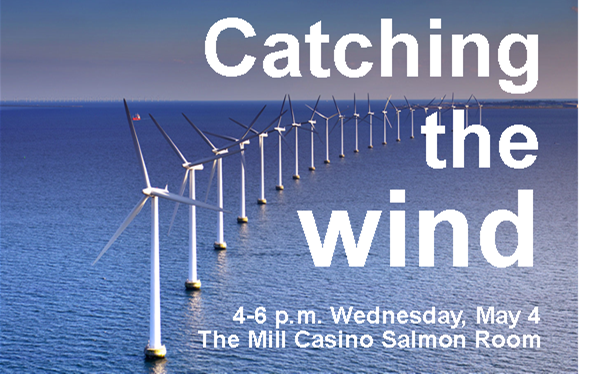
Former state Sen. Arnie Roblan will lead an informal roundtable discussion from 4-6 p.m. Wednesday, May 4, in the Salmon Room at The Mill Casino-Hotel & RV Park. Everyone is welcome.
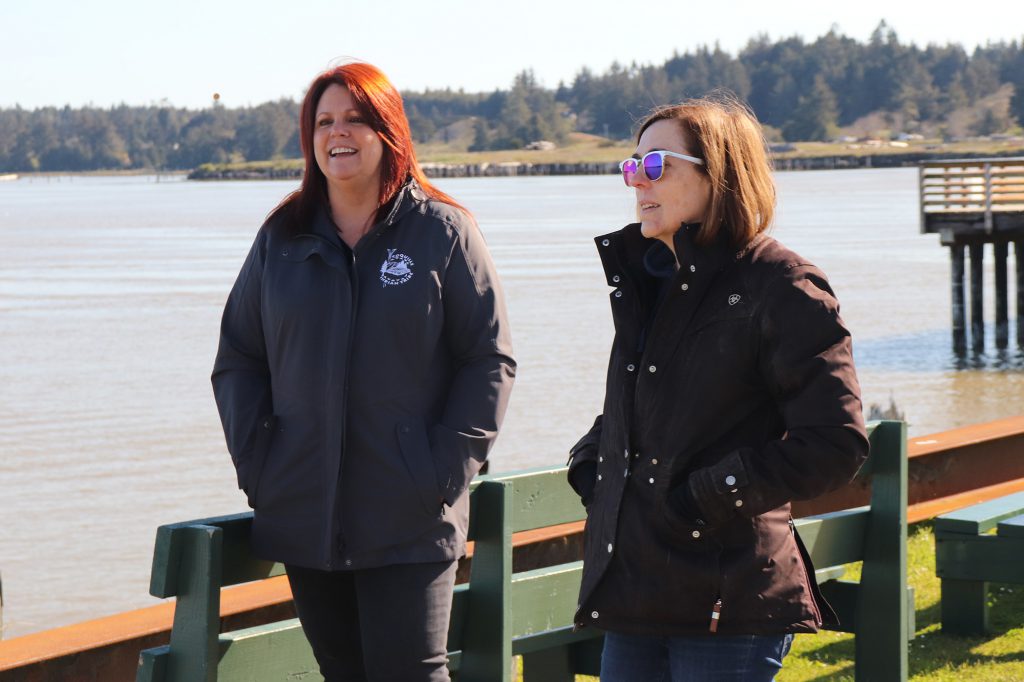
“We’re hoping to bring people together to exchange information and see how the community feels about this,” said Coos County Commissioner Melissa Cribbins, one of the event organizers. “We want to make sure everyone’s voice is heard.”
The federal Bureau of Ocean Energy Management and the Oregon Department of Land Conservation and Development are leading a data gathering and public engagement process, aiming to complete offshore wind planning for the Oregon Coast. Coos Bay, Bandon and Brookings have been identified as “call areas” for consideration as potential wind energy sites.
The decision-making process includes consideration of diverse factors such as fish and shellfish habitat, whales, migratory birds, sea turtles, marine mammals, vessel traffic, fishing and existing underwater cables.
The community roundtable is not an official part of the BOEM/DLCD process. Its goal is to promote local discussion and understanding of the process and the issues.
The event is sponsored by Coos County; the Coquille Indian Tribe and the Confederated Tribes of Coos, Lower Umpqua and Siuslaw Indians; the cities of Coos Bay, North Bend and Bandon; the Port of Bandon and the Oregon International Port of Coos Bay; and state Reps. David Brock Smith and Boomer Wright.
For more information, contact Commissioner Cribbins at 541-396-7535.
COOS BAY – The Coquille Indian Tribe’s new Ko-Kwel Wellness Center in Coos Bay has received accreditation from the Accreditation Association for Ambulatory Health Care. Accreditation distinguishes the KWC among outpatient facilities for its adherence to rigorous standards of care and safety.
“We are very proud of how far we have come in less than a year,” said Kathryn Halverson, chief executive officer of the Coquille Tribe’s Health and Wellness Division. “2021 brought a lot of changes, including a new building and many new staff. Preparing for accreditation took a lot of collaboration and effort, and I am very grateful for our amazing team that contributed to this success.” The KWC, formerly the Coquille Tribal Community Health Center, initially received accreditation in 2001 and subsequently passed national reviews in 2004, 2007, 2010, 2013, 2016 and 2019.
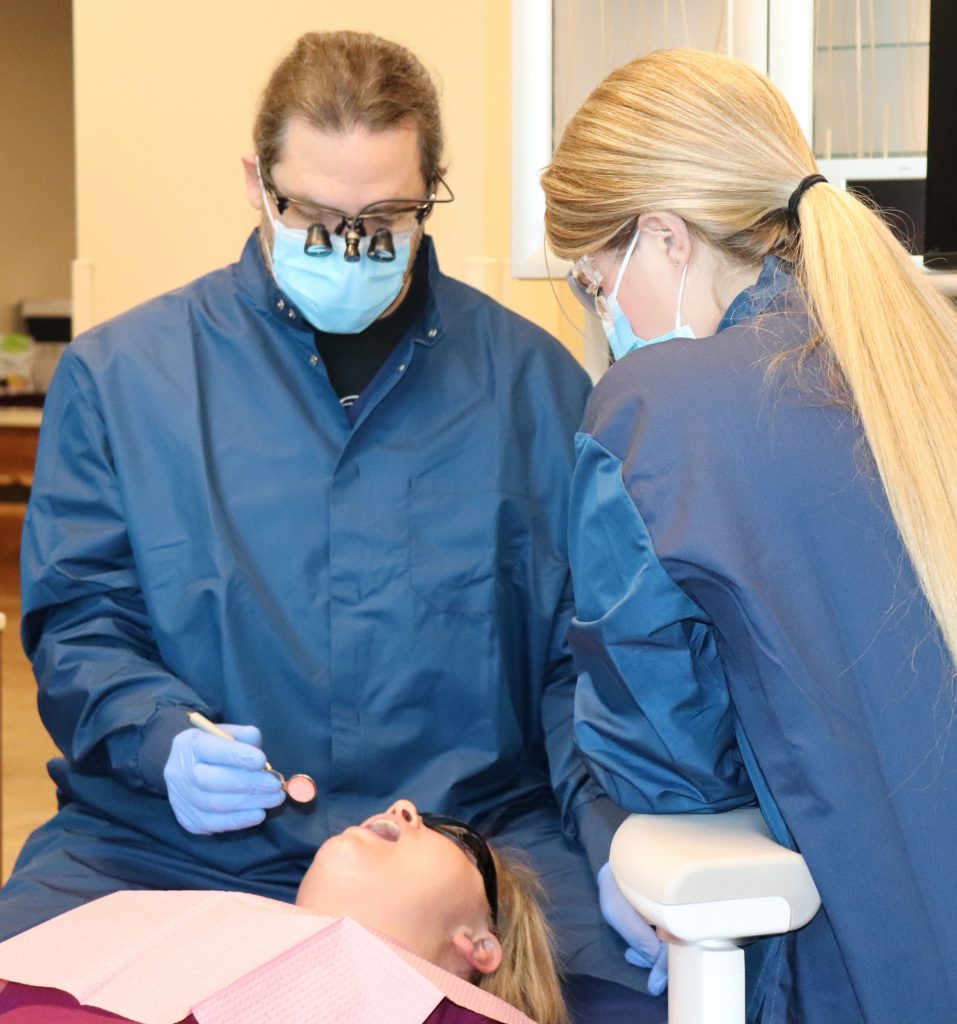
Construction of the wellness center was completed in the summer of 2021 on the Kilkich Reservation near Charleston. KWC serves Coquille Tribal families, members of other federally recognized tribes, Coquille Tribal employees, and the general public as capacity allows. It offers primary medical care, dental care, behavioral health services and an onsite pharmacy.
Prospective patients can learn more at www.kokwelwellness.org, or by calling (541) 888-9494. Status as an accredited organization means the KWC has met nationally recognized health-care standards. Organizations that earn AAAHC accreditation embody an ongoing commitment to high-quality care and patient safety.
Ambulatory health-care organizations seeking AAAHC accreditation undergo an extensive self-assessment and onsite survey by AAAHC surveyors – physicians, nurses and administrators who are actively involved in ambulatory care.
Founded in 1979, AAAHC is the leader in ambulatory health-care accreditation, with more than 6,100 organizations accredited. Accredited outpatient settings include ambulatory surgery centers, office-based surgery facilities, endoscopy centers, student health centers, medical and dental group practices, community health centers, employer-based health clinics, retail clinics and tribal health centers, among others.
NORTH BEND – The family of Chief Donald Boyd Ivy invites the community to honor his memory on Saturday, May 7, 2022, at The Mill Casino-Hotel.
Family members, friends and colleagues will celebrate Chief Ivy’s life and share memories, both in person and in a tribute film. The event starts at 1 p.m. and will be followed by a reception. Everyone is welcome.
Chief Ivy was born in North Bend in 1951 and grew up in the Empire area. After pursuing a career in retailing and sales, he returned to the Coos Bay area in 1991 to work for his tribe. He was elected as its chief in 2014 and served until a few days before his death on July 19, 2021, after a seven-month battle with cancer.
He is remembered as a dynamic leader and skilled consensus builder. He worked effectively to establish Oregon’s strong inter-tribal and inter-governmental relationships, and he relentlessly pursued economic and educational opportunities for Indian people. By researching and sharing knowledge about tribal culture and history, he encouraged understanding and respect for the heritage of Native American people in Oregon.
A public memorial for Chief Ivy was delayed during the COVID pandemic. Now, with restrictions lifted on public gatherings, his many friends can join his family for an afternoon of recognition and remembrance.
The family requests no photography or recording of the event.
In lieu of flowers, the family asks that donations in Chief Ivy’s memory be given to the Donald Ivy Memorial Scholarship Endowment at Southwestern Oregon Community College. Donations also can be given to the Elakha Alliance, an organization he helped found to restore Oregon’s sea otter population, at www.elakhaalliance.org/donivy/.
Tribe’s efforts aid Coquille River brood stock collection
BANDON – More than 500 hours of work paid off with an eightfold increase in the Bandon Hatchery’s 2021 collection of fall Chinook salmon brood stock.
In 2020, the state-owned hatchery secured only three breeding pairs of the iconic but increasingly scarce fish. With help from Coquille Tribal employees and community volunteers, the number rose to 24 pairs in 2021.
“This is something to celebrate,” said tribal Chairman Brenda Meade. “This is an accomplishment.”
The Coquille River’s fall run of Chinook salmon is an ancient and treasured resource for the tribe, but numbers of fish returning from the ocean have crashed in the past decade. After the Coquille Tribal Council declared an emergency this summer, the tribe partnered with the Oregon Department of Fish and Wildlife in a campaign to rescue the fishery.
The project missed the tribe’s goal of 70 breeding pairs, mainly because female salmon were in short supply. Many of the 88 captured males will die as bachelors. Helena Linnell, the tribe’s biological planning and operations manager, blamed the imbalance on “the luck of the draw.”
Still, 2021’s increased brood stock is encouraging. With 24 female fish averaging 3,400 eggs each, the hatchery will produce dramatically more juvenile fish – known as “smolts” – than in recent years.
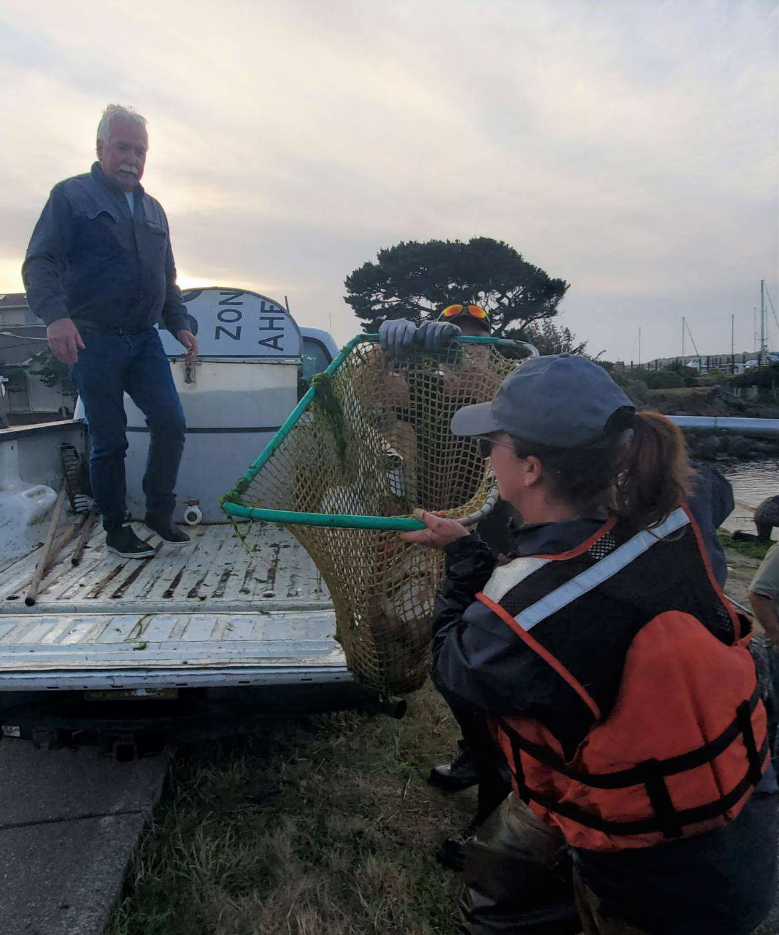
Photo: Tribal biologist Helena Linnell helps hoist a newly netted salmon to the waiting hands of Tribal Council member Don Garrett. He’ll put the fish in a tank for transport to the hatchery.
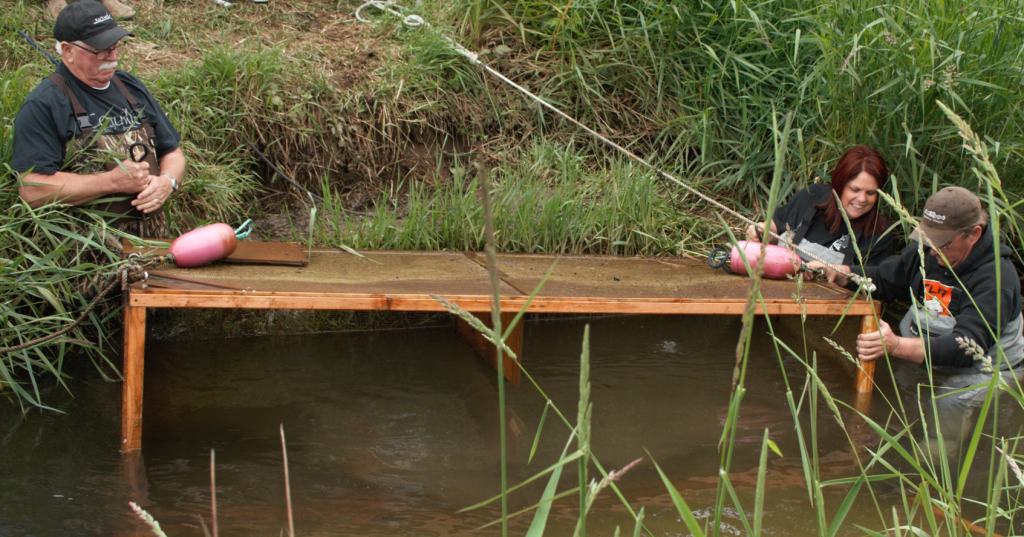
To make that possible, tribal staff members and community volunteers spent long hours in and on the river. They herded and netted adult salmon, they worked alongside ODFW’s hatchery staff, and they “electrofished” for invasive predators, to create a more hospitable home for smolts.
With 2021 finished, the tribe’s attention has turned to 2022.
Salmon hatch in rivers but mature at sea, returning as adults to spawn and die. Linnell said 2021’s efforts focused on “harvest augmentation” – breeding and releasing more hatchery-produced smolts. Doing so yields more adults for tribal members and sportsmen to catch, but it doesn’t restore the native population of wild fish.
The tribe advocates a more ambitious agenda in 2022 and beyond, including long-term enhancement of upstream habitat for wild salmon to spawn and smolts to grow.
Habitat enhancement means lowering water temperature and reducing sediment, by planting trees and altering agricultural practices. Those goals depend on the cooperation of willing landowners, but even incremental changes would be a “gigantic” step, Linnell said.
More electrofishing is also on 2022’s agenda. Electrofishing uses a specially equipped boat to shock invasive smallmouth and striped bass, so that they can be scooped up and eliminated. The more bass are killed, the more smolts can survive to adulthood.
Linnell emphasized that salmon restoration requires collaboration among state and local agencies, private organizations and the public. Meade expressed gratitude to the many groups and individuals who have stepped up as community partners.
“We have had tremendous outreach from the community,” Meade said.
To make a difference for future generations of fish and humans, those efforts will need to continue.